Filing your taxes is an unavoidable part of being a business owner. Every year, you must fill out a Self Assessment tax return to calculate how much you owe.
When the new tax year begins on 6 April, you can file your return for the previous year. The deadline for filing and paying an outstanding tax bill is the following 31 January.
Research shows that many business owners leave it to the last minute before sorting out their Self Assessment, and a considerable number miss the deadline altogether.
Figures from the UK government show that about 1 million people missed the Self Assessment deadline in 2024/25
11.48 million people filed their 2024/25 tax returns by the deadline. Many of them were prepared, but according to the UK government, 27,456 submitted theirs in the last hour of the day on 30 January.
An estimated 1 million people missed the deadline altogether.
This is likely because, as you know, business owners have a long list of responsibilities to manage. While you are focused on the day-to-day running of your company and your plans for the future of the business, your tax return may not be a priority.
As a result, you might be in a rush to gather all the important paperwork and file a tax return at the last minute. Unfortunately, this could lead to problems.
Filing your tax returns late will result in fines
The most immediate issue caused by lack of preparedness is that you will be fined if you miss the Self Assessment deadline.
You must pay:
- A £100 fixed penalty, even if there is no outstanding tax to pay
- £10 a day after three months, up to a total of £900
- 5% of the outstanding tax or £300 (whichever is greater) after six months
- Another 5% of the outstanding tax or £300 (whichever is greater) after 12 months.
There will also be interest to pay on any outstanding tax.
As such, missing the deadline could considerably increase the amount you must pay to HMRC.
Starting early could mean you have more opportunities for tax planning
Even if you meet the 31 January deadline, waiting until the last minute before filing for Self Assessment could mean you miss valuable opportunities to reduce your tax bill.
There are several ways we could help you achieve this.
Claiming allowable expenses
When calculating how much Corporation Tax (or Income Tax if you are a sole trader) you owe, certain expenses are tax-deductible.
There are many allowable expenses including:
- Staff costs such as wages and National Insurance contributions (NICs)
- Office rent and business rates
- Pension contributions
- Utility bills
- Equipment
- Travel
To claim all allowable expenses, you will need to gather receipts and calculate the qualifying payments. This process is far easier if you keep good records throughout the year and add up your expenses regularly, rather than rushing to find all the relevant paperwork the day before the deadline.
Being prepared means you can maximise the amount of deductible expenses you claim.
Planning how you extract wealth from the business
When drawing an income from a limited company, you have several options. You can claim a salary, which will be subject to Income Tax, or you could draw dividends from shares and pay Dividend Tax.
As of 2026/27, any income that exceeds the Personal Allowance of £12,570 will be subject to Income Tax. Meanwhile, you can earn £500 from dividends before triggering a tax charge. This is your Dividend Allowance.
Income Tax and Dividend Tax are charged at different rates, depending on which earnings bracket the income falls into.
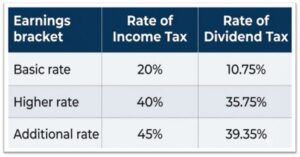
When planning how to extract wealth from your business, you must consider how to make use of your Personal Allowance and Dividend Allowance, as well as the differing rates of Income and Dividend Tax.
We can support you with this and help you find the most tax-efficient way to draw an income. This will be easier if you give yourself plenty of time to plan and understand your tax position before the deadline arrives.
Increasing pension contributions
If you run a limited company, pension contributions, including those made to a pension plan in your own name, may be considered an allowable expense. Provided they are wholly and exclusively for the purposes of trade, contributions to employees and your own pension will be tax-deductible.
You will also receive Income Tax relief at your marginal rate on pension contributions up to 100% of your earnings. However, you will trigger an additional tax charge if your contributions exceed the Annual Allowance (£60,000 in 2026/27).
This may be an effective way to extract wealth from the business tax-efficiently. However, it is important to note that you will not be able to access these funds until you reach the normal minimum pension age (NMPA) of 55, rising to 57 from April 2028 unless you have a protected pension age.
As you plan for Self Assessment, we can explore how increasing pension contributions may reduce your Corporation Tax bill while ensuring you extract enough accessible wealth to cover your short- to medium-term needs.
Get in touch
When you consider your Self Assessment early, you can make tax planning part of your wider financial plan and potentially reduce the amount you pay.
Please do get in touch with us at DBL Asset Management to learn more about how we could help with this.
Email enquiries@dbl-am.com or call 01625 529499 to speak to us today.
Please note
This article is for general information only and does not constitute advice. The information is aimed at individuals only.
All information is correct at the time of writing and is subject to change in the future.
Please do not act based on anything you might read in this article. All contents are based on our understanding of HMRC legislation, which is subject to change.
The Financial Conduct Authority does not regulate tax planning.
A pension is a long-term investment not normally accessible until 55 (57 from April 2028). The fund value may fluctuate and can go down, which would have an impact on the level of pension benefits available. Past performance is not a reliable indicator of future performance.
The tax implications of pension withdrawals will be based on your individual circumstances. Thresholds, percentage rates, and tax legislation may change in subsequent Finance Acts.